If there is one place where you can study human psychology in just 15 minutes, it is a bus leaving Zagreb for Split. Or, really, any intercity bus, but this is the route I take most often.
Even before you get on the bus, you quietly pray that nobody will sit next to you. You check your reservation number with a growing sense of anxiety: “Will someone be sitting next to me?” Buses are generally not completely full, except on Friday and Sunday afternoons, when students are travelling home or back to university during the winter, and tourists are on the move during the summer.
So, before you even get on the bus, you start scanning the people around you. And now you pray a little harder that the woman who has been shouting into her phone on speaker for the past ten minutes does not end up sitting next to you. You are not particularly excited about the idea of that sweaty guy sitting next to you either. At some point, you are bound to touch, and the mere thought of someone else’s sweat getting on you is enough to make you shudder.
If you want to sit alone, or simply want nobody next to you for the entire five-hour journey, you need to play those crucial 15 minutes of boarding correctly. First, try to be one of the first passengers to board, take your seat and prepare your strategy. If the seat next to you is still empty once the bus fills up and the driver starts the engine, you have won the bus jackpot. Show over.
There are all kinds of tactics passengers use. And although we have seen them all before, they work surprisingly well.
Let’s take them one by one.
The oldest trick in the book is putting your bag on the seat next to you. Preferably the biggest bag you can find. Ideally, put another bag underneath it too, so it looks like there is absolutely no room and that asking you to move everything would be terribly inconvenient for you.
The psychology behind it is pretty simple. Most people will not even ask whether the seat is free if there is another option. They would rather walk a few more rows than ask a complete stranger to move their bag. As long as the bus is not full, or someone is not particularly determined to sit in that exact seat because they have reserved it, the tactic works surprisingly well.
It turns out that even when they have a reservation, many people would rather sit alone and will first look for another option. Of course, if someone does decide to sit in their reserved seat, the bag ends up in your lap within seconds, while its owner gives that familiar sigh that makes it very clear you have just ruined their carefully planned peace and quiet.
Why would anyone sit on the aisle when the window seat is usually better because of the view? To stop other people from sitting there. Tall people like aisle seats because they can stretch their legs, as do many people who have knee problems. So right from the start, you have eliminated a certain percentage of potential seatmates. On top of that, people feel uncomfortable asking strangers for favours. If you sit in the aisle seat, most people will simply keep walking and look for somewhere they can sit without having to ask. This little psychological game often works.
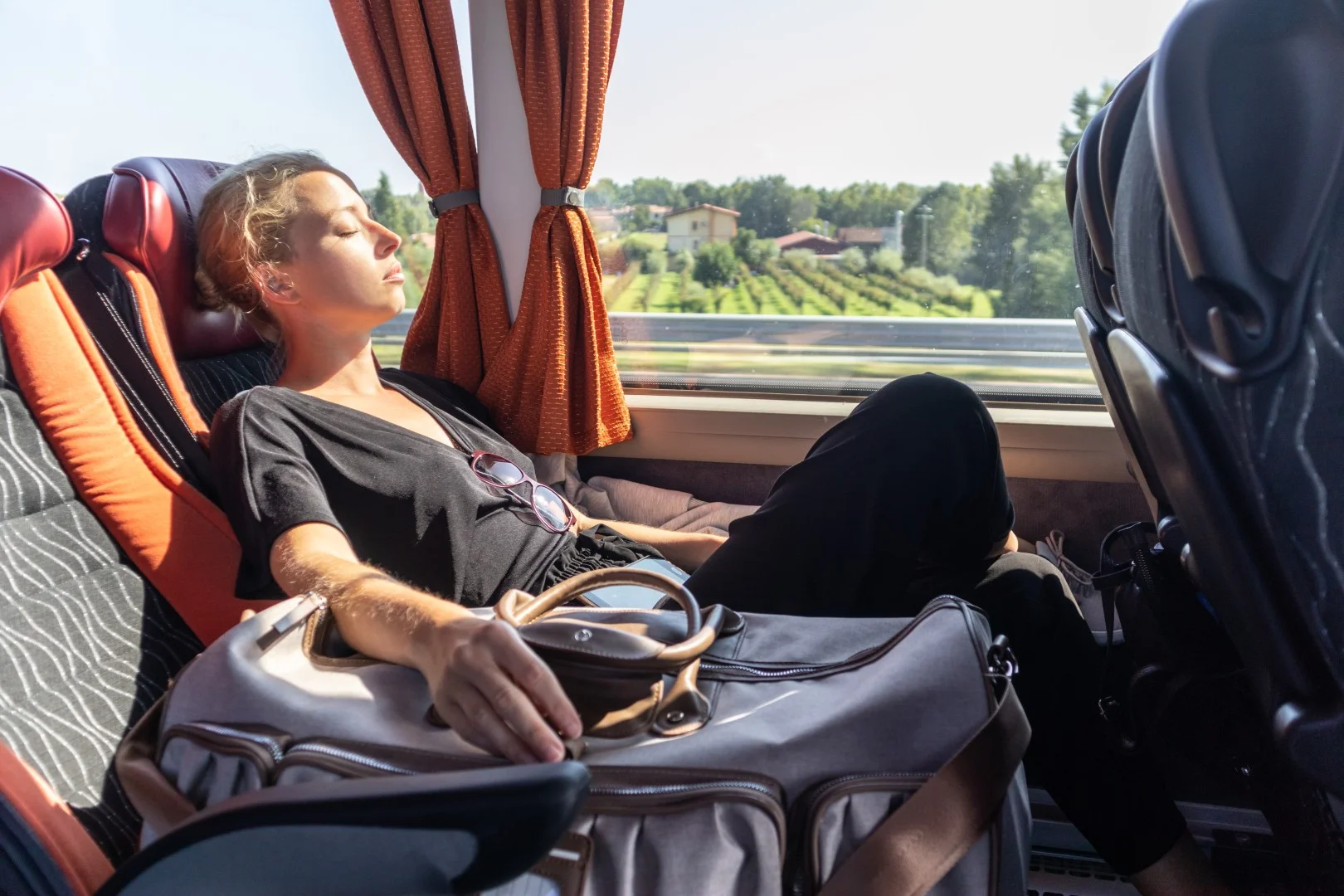
Some people have an incredible ability to fall asleep anywhere, anytime, and travelling seems to make them especially sleepy. These are the people whose parents apparently had to drive them around as babies just to get them to sleep.
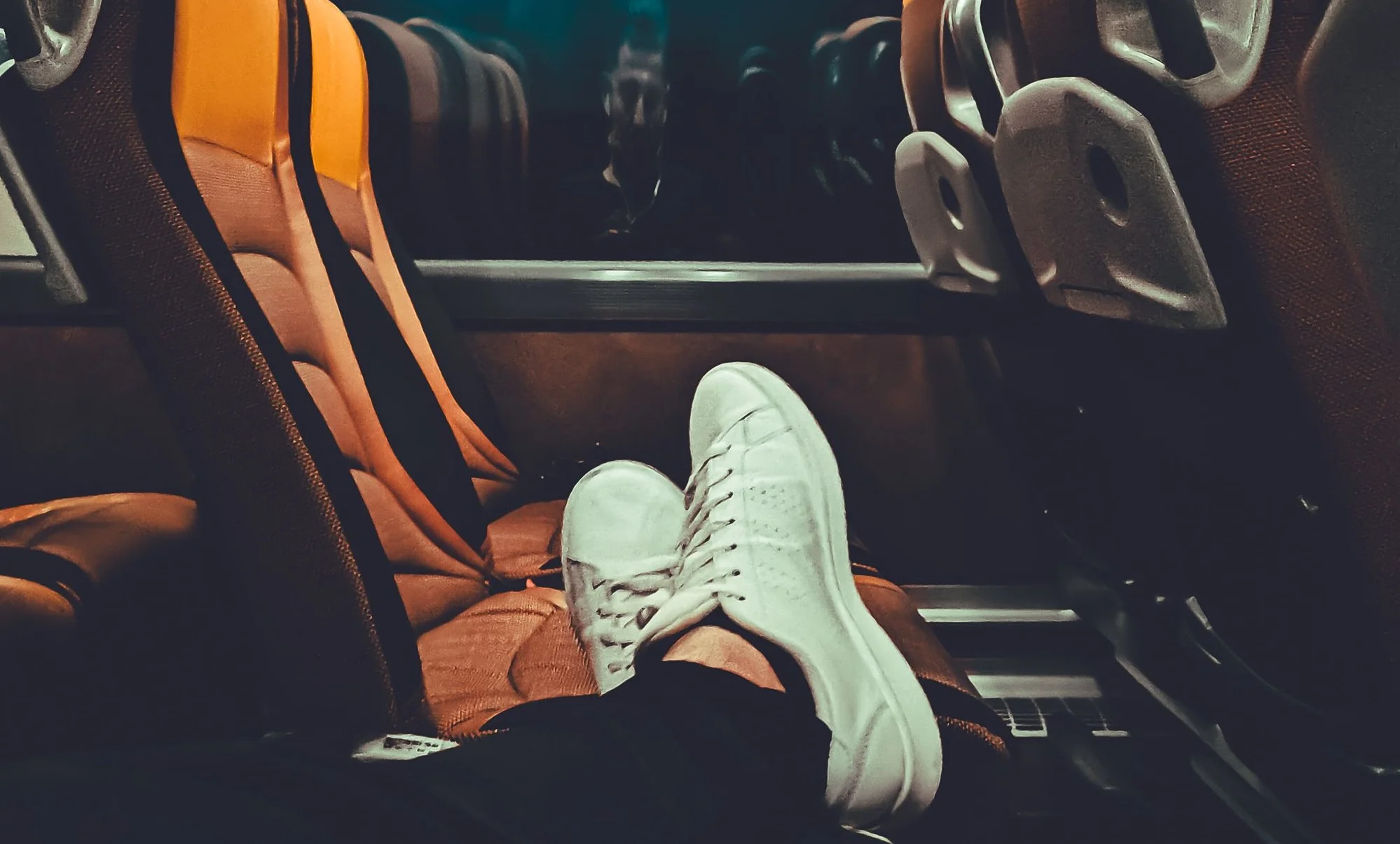
But nobody actually gets on a bus, sits down and immediately falls asleep. It’s a strategy. They know other passengers will feel awkward waking them up and asking them to move, so they will first look for another seat. There is also the slight fear that you might fall asleep again and they will end up being used as your pillow.
Every bus has at least one passenger who simply does not care about anyone around them. They call someone and start talking. At least in my experience, it is most often older women. They use the bus ride to catch up with all their friends, neighbours and relatives, while everyone else gets a live broadcast.
You learn that the neighbour’s husband broke something somewhere, that the brother-in-law forgot to register his car again and that meat at the butcher’s is ridiculously expensive.
Nobody asked for this information, but everyone gets it for free. Bonus points if the conversation lasts more than half an hour and involves at least three people shouting over one another through the speaker. It happens.
That is why being unbelievably loud on your phone while other passengers are still boarding is such a good tactic. People will not just avoid sitting next to you. They will avoid the few rows around you as well.
Instead of an ordinary bag, you put a laptop bag on the seat next to you, while you are already typing away. There is the laptop, two phones, headphones, a charger, a tablet, and you are clearly already talking to someone, saying: “Let’s move that to next quarter.”
Nobody wants to listen to typing for the next several hours, so type away enthusiastically and completely ignore the first “Excuse me, is the seat next to you free?” – especially since you also happen to have headphones on.
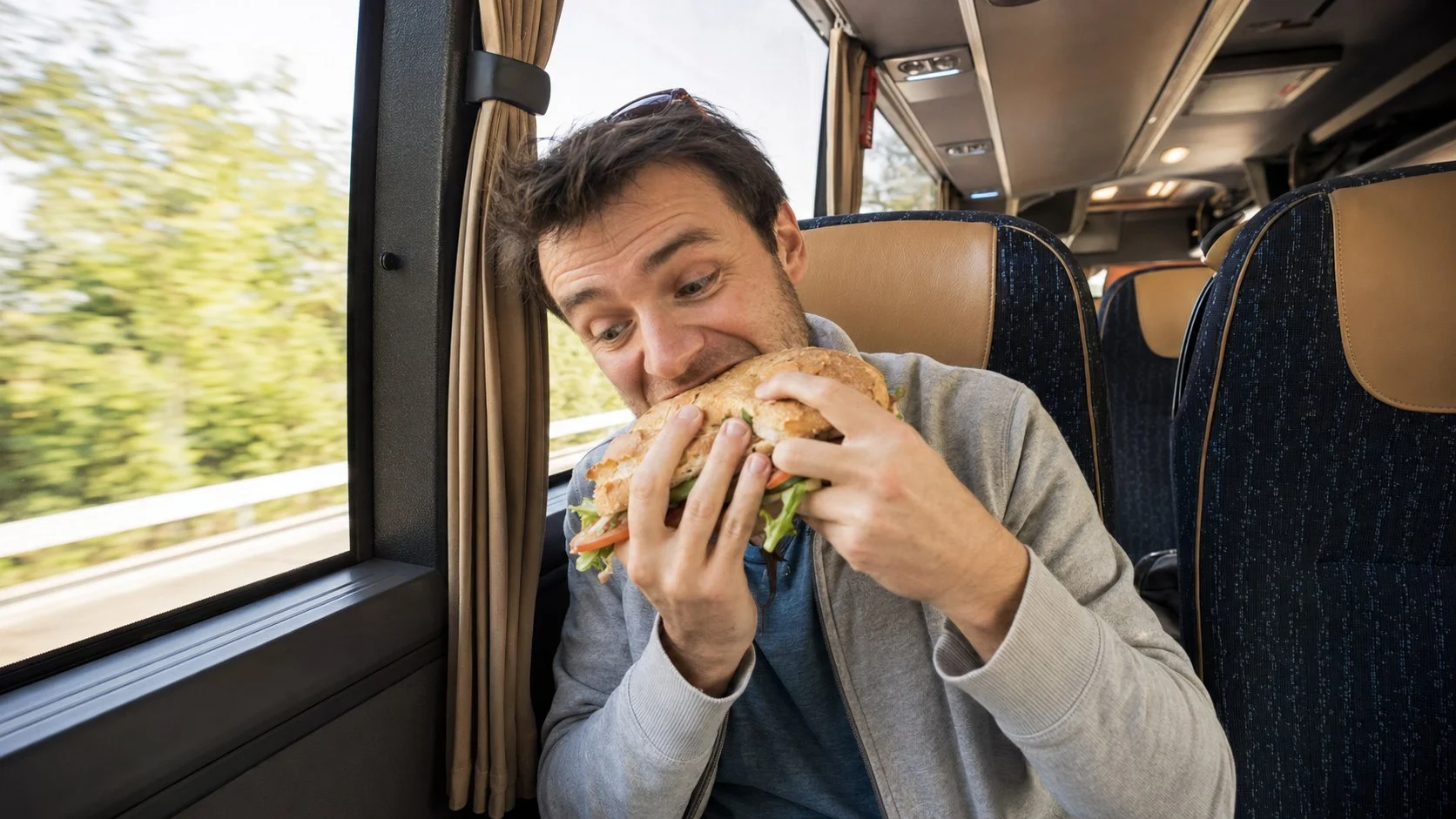
There’s hardly a bus journey where someone doesn’t start eating within five minutes of departure. I think travelling opens up some kind of special hunger centre in the human brain. I can certainly relate – by the time I reach Karlovac, I am already thinking about what I could eat.
But if you start eating as soon as you sit down, and the food happens to be a huge sandwich that is falling apart everywhere while you struggle rather painfully to control the contents, there is a very good chance you will remain alone for the entire journey. Exactly as you intended.
If you put on a face mask, you will definitely become the person everyone silently prays they will not have to sit next to.
A face mask immediately makes people wonder whether you might be sick – and nobody wants to take that chance. You might infect them, so they will probably look for a seat as far away from you as possible.
Do these scenes and strategies sound familiar? If you have ever travelled by bus, they certainly should. You may now be thinking about how clever some people were and how they managed to fool you. Or perhaps you just patted yourself on the back because you are actually a professional at this.
Either way, a lot of us do the same things on buses. We all have our little tricks to make the journey more comfortable, we all secretly want a little more space, and we all hope the seat next to us will remain empty.
My usual strategy is a combination of tricks 1, 2 and 5. I sit in the aisle seat, open my laptop (or a book), and put my bag on the window seat. Of course, I don’t do this if the driver says the bus is full when we board. I always ask first.
Find available bus routes, choose the departure that suits you and book your ticket online in just a few clicks.


 Back to nomago.hr/en